-
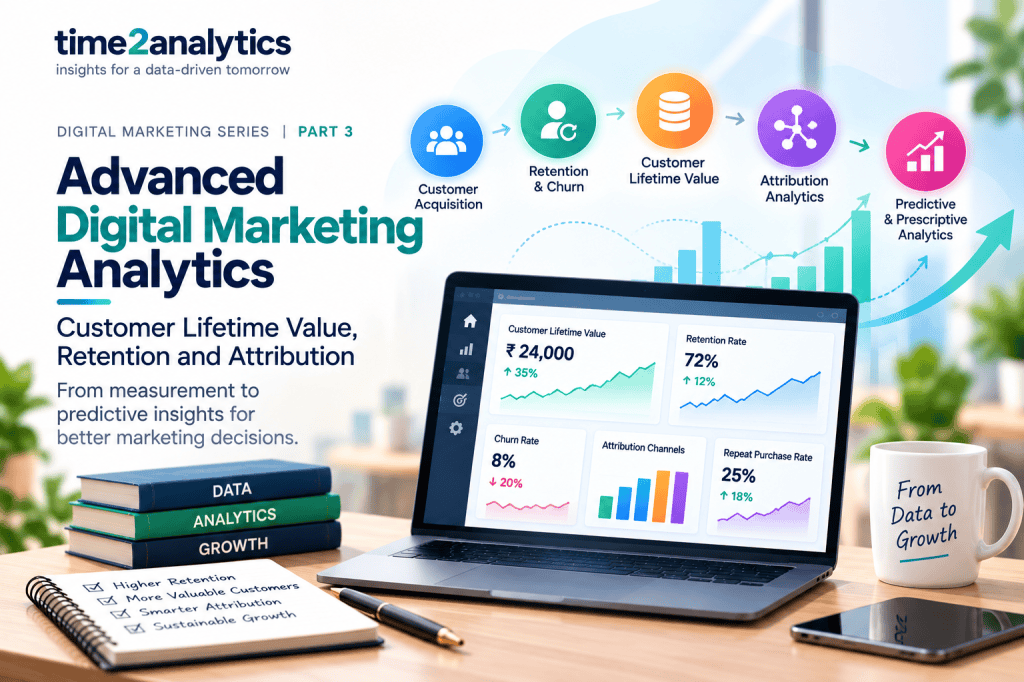 Continue reading →: Advanced Digital Marketing Analytics: Customer Lifetime Value, Retention and Attribution
Introduction A digital marketing campaign should not be evaluated only by the number of clicks, leads or immediate purchases it generates. Consider two customers: Customer A Customer B Looking only at the first transaction, the customers may appear similar. From a long-term business perspective, however, their economic value can be…
-
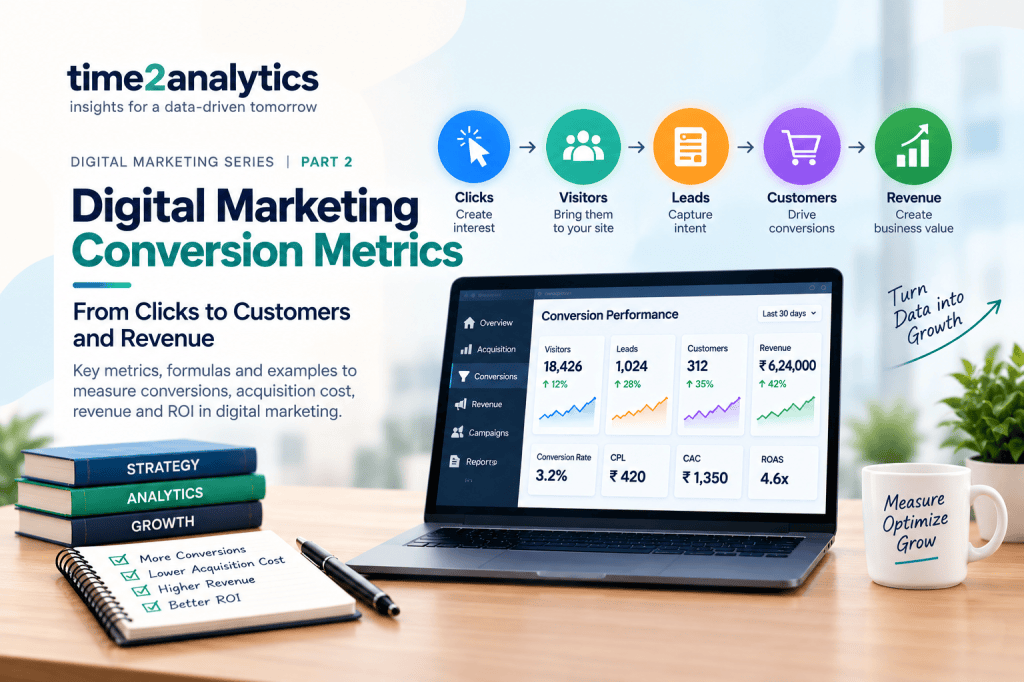 Continue reading →: Digital Marketing Conversion Metrics: From Clicks to Customers and Revenue
Introduction Getting people to see an advertisement or visit a website is only the beginning of digital marketing. The more important question is: What did visitors actually do after arriving? Did they: These actions are called conversions. This article examines the metrics used to measure the movement from traffic to…
-
 Continue reading →: Digital Marketing Metrics: Understanding Reach, Engagement and Traffic
Introduction Digital marketing has changed the way organizations attract and communicate with customers. Search engines, websites, social media, email, online advertising, mobile applications and digital marketplaces allow organizations to reach customers at different stages of the buying journey. However, simply being present on digital platforms does not guarantee marketing success.…
-
 Continue reading →: From Invisible to Unmissable
The Complete Guide to SEO That Actually Grows Your Traffic Authors: Beesu Sai Kumar , Chiranthana Prasad M. R. & Guruprasad Bhupali The Bakery Nobody Could Find. Priya opened her bakery on a quiet street corner three years ago. Her cinnamon rolls were, without exaggeration, the best in town. Regulars…
-
 Continue reading →: How Your Phone Knows You Better Than your Best Friend?
Authors: Mandar Wagh, Venkatesha G., Raakesh M., Sowmiya A. You open your inbox and find two emails waiting. One says, “Dear Valued Customer, Check Out Our Spring Sale.” The other says, “Hi Sarah, the running shoes you looked at last week just dropped 20%, and we think you’ll love this…
-
 Continue reading →: The Dark Side of Influencer Marketing
(That Nobody Talks About) Authors: Sonika U., G. Meghana & Krishnendu Roy It’s 11 p.m. Mia is lying in bed, scrolling. A woman she’s followed for two years — someone who feels like an old friend by now — holds up a small brown bottle. “This changed my life,” she…
-
 Continue reading →: Why Customer Lifetime Value decides who wins the next decade of digital marketing
The Ad Auction Nobody Can Win on Price Alone Authors: Y. Jeevan Reddy, Kirubha Harini A. M., Ravi Ramm G. & Suthiksha P. Introduction Digital marketing has transformed the way businesses engage with consumers by enabling real-time, personalized, and data-driven interactions across platforms such as search engines, social media, email,…
-
 Continue reading →: The Rise of AI Chatbots in Customer Service: Friend or Gimmick?
Authors: Akshaya Nair, Anusha G. K., & Jeevan Reddy B. Chances are, your last customer service chat wasn’t with a human at all. A little bubble popped up, said “Hi, how can I help?” and answered your question in seconds. AI chatbots have quietly taken over the front line of…
-
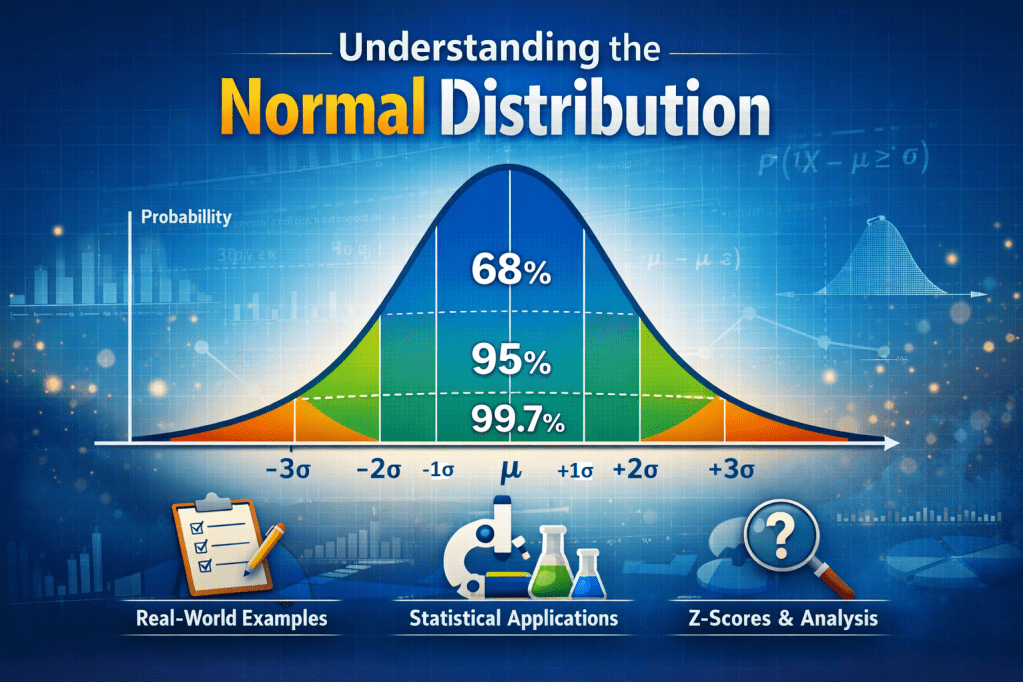 Continue reading →: 📊 Normal Distribution: Concepts, Properties, Applications & Examples
1. Introduction In statistics, one of the most important and widely used concepts is the normal distribution, also known as the Gaussian distribution. It plays a central role in data analysis, probability theory, and inferential statistics because many real-world phenomena approximately follow this distribution. From students’ test scores to measurement…
-
 Continue reading →: Model Development Document (MDD) in Financial Model Risk Management (MRM)
Introduction In modern financial institutions, quantitative models drive critical decisions—from credit approvals to market risk assessment and fraud detection. However, with increasing reliance on models comes model risk—the risk of incorrect decisions due to flawed or misused models. To mitigate this, organizations implement Model Risk Management (MRM) frameworks. A key…
-
 Continue reading →: Model Validation Report (MVR) in Financial Model Risk Management (MRM)
Introduction As financial institutions increasingly rely on quantitative models for decision-making, the importance of independent model validation has grown significantly. Even a well-developed model can fail if not properly validated. This is where the Model Validation Report (MVR) plays a crucial role. It provides an independent assessment of whether a…
-
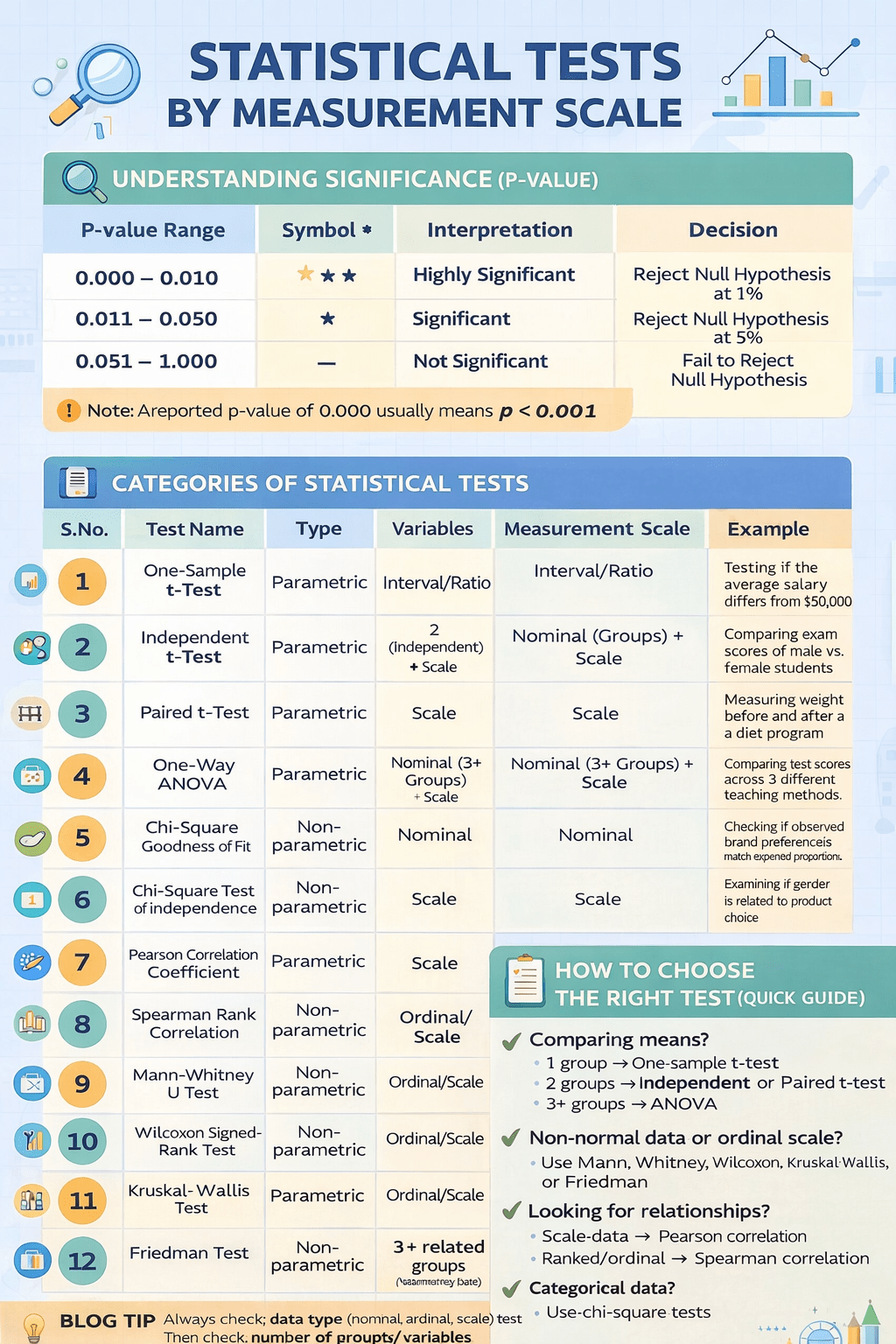 Continue reading →: 📊 Statistical Tests Explained: How to Choose the Right Test?
Statistical analysis can feel overwhelming—especially when you’re faced with choosing the right test for your data. Should you use a t-test? ANOVA? Chi-square? This guide breaks everything down in a simple, practical way using real-world examples and clear decision rules. 🔍 What is a P-value? A P-value helps you determine…
-
 Continue reading →: 🔬 Research Methodology: A systematic roadmap for scientific inquiry
🌟 Introduction Research is not just about collecting data or running statistical tests. It is about systematically answering a question using structured reasoning, evidence, and appropriate methods. Whether in: A well-designed research methodology ensures that findings are: In simple terms: Research methodology is the blueprint of a research study. Research…
-
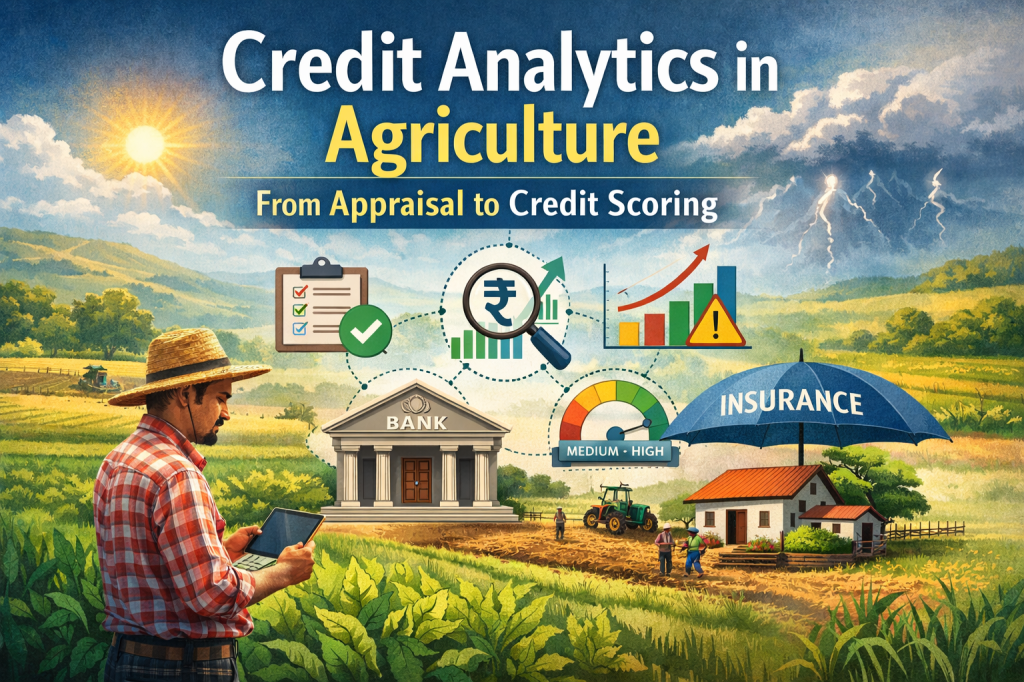 Continue reading →: Credit Analytics in Agriculture: From Appraisal to Credit Scoring
A Practical, Data-Driven Perspective Agricultural lending is fundamentally different from retail or corporate lending. Unlike salaried borrowers or large firms, farmers and Farmer Producer Organizations (FPOs) operate under high uncertainty—weather shocks, price volatility, biological risks, and policy interventions. This article explains four core pillars of agricultural credit analytics using realistic…
-
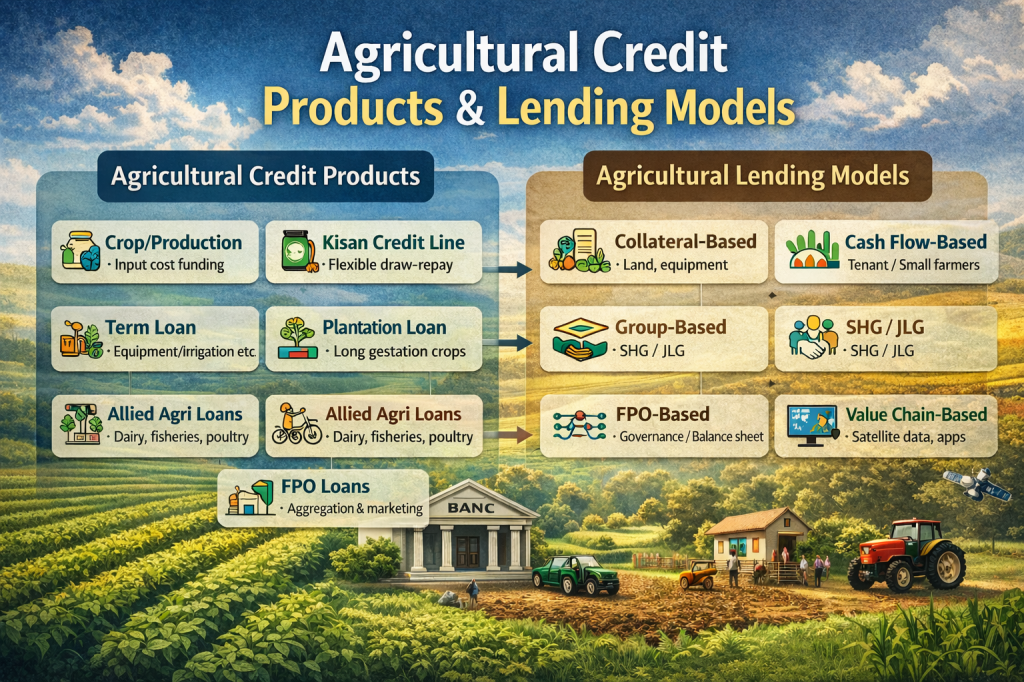 Continue reading →: 🌾 Agricultural Credit Products & Lending Models
(How money actually flows to farmers, FPOs & agri-ecosystems) 1️⃣ Agricultural Credit Products 👉 “What type of loan is given?” 🔹 A. Crop / Production Loans (Short-term) Purpose Key characteristics Analytics angle 📌 Most common agri loan in India 🔹 B. Kisan Credit Line–Type Revolving Credit Purpose Key characteristics Analytics…
-
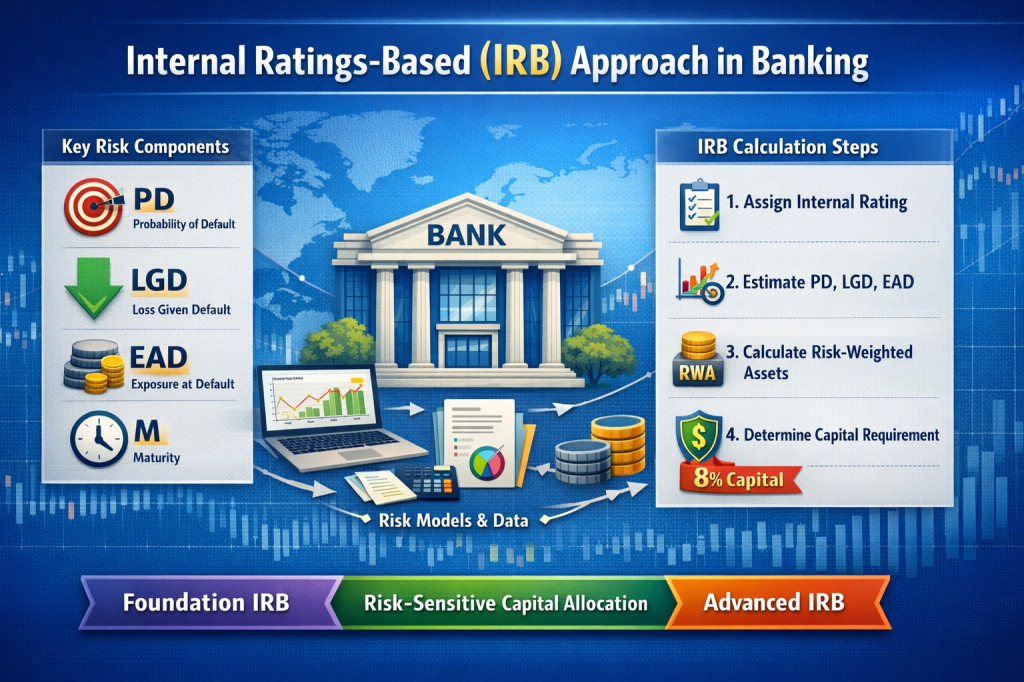 Continue reading →: 🏦 Internal Ratings-Based (IRB) Approach in Banking
Advanced credit risk measurement under Basel norms 🌟 Introduction Credit risk—the risk that borrowers may fail to meet their obligations—is the largest risk faced by banks. To ensure banks hold sufficient capital against credit risk, global regulators introduced standardized and advanced risk measurement frameworks under the Basel Accords. One of…
-
 Continue reading →: 🔍 Clustering Machine Learning Models
🌟 Introduction In many real-world problems, labels are not available. We may not know in advance: This is where clustering comes in. Clustering is an unsupervised machine learning technique that groups data points such that: Clustering is widely used in marketing, finance, healthcare, agriculture, image processing, and anomaly detection. 📌…
-
 Continue reading →: 🤖 Logistic Regression and Support Vector Machine (SVM)
🌟 Introduction Classification problems are everywhere: Two of the most important and widely used algorithms for such tasks are: Though very different in philosophy, both are core supervised learning models and often serve as baseline and benchmark models in real projects. 🔵 Logistic Regression 📌 What is Logistic Regression? Logistic…
-
 Continue reading →: 🌳 Decision Tree and Random Forest Machine Learning Models
🌟 Introduction Among supervised machine learning algorithms, Decision Trees and Random Forests are widely used because they balance interpretability, flexibility, and strong performance. They are extensively used in finance, healthcare, retail, agriculture, and fraud detection, making them must-know models for any analytics professional. 🌳 Decision Tree Model 📌 What is…
-
 Continue reading →: 📊 Performance Evaluation Metrics for Machine Learning Models
🌟 Introduction Building a machine learning model is only half the job. The real challenge lies in evaluating how well the model performs and whether it can be trusted for real-world decision-making. Performance evaluation metrics help us: Since regression and classification problems are fundamentally different, their evaluation metrics also differ.…

Hello,
It’s time2analytics

Welcome to time2analytics.com, your one-stop destination for exploring the fascinating world of analytics, technology, and statistical techniques. Whether you’re a data enthusiast, professional, or curious learner, this blog offers practical insights, trends, and tools to simplify complex concepts and turn data into actionable knowledge. Join us to stay ahead in the ever-evolving landscape of analytics and technology, where every post empowers you to think critically, act decisively, and innovate confidently. The future of decision-making starts here—let’s embrace it together!
Let’s connect
Join the fun!
Stay updated with our latest tutorials and ideas by joining our newsletter.

